
LIFE BEYOND FIRST CLASS


DEPARTURES
SEEING MANHATTAN BEYOND THE OBVIOUS
With Mark Venaglia as guide, Manhattan unfolds as a living archive of architecture, memory, and quiet discovery.
REGINA RUSSO
.jpg)
.jpg)
For many visitors, Manhattan reveals itself in quick impressions. The skyline. The museums. The restaurants that require months of planning. The landmarks photographed so often they feel familiar before you even arrive.
But beyond the obvious lies a deeper city, one that rewards patience and curiosity. It is a place where architecture becomes narrative, where neighborhoods quietly carry centuries of stories, and where the most revealing details often appear where no one thinks to look.
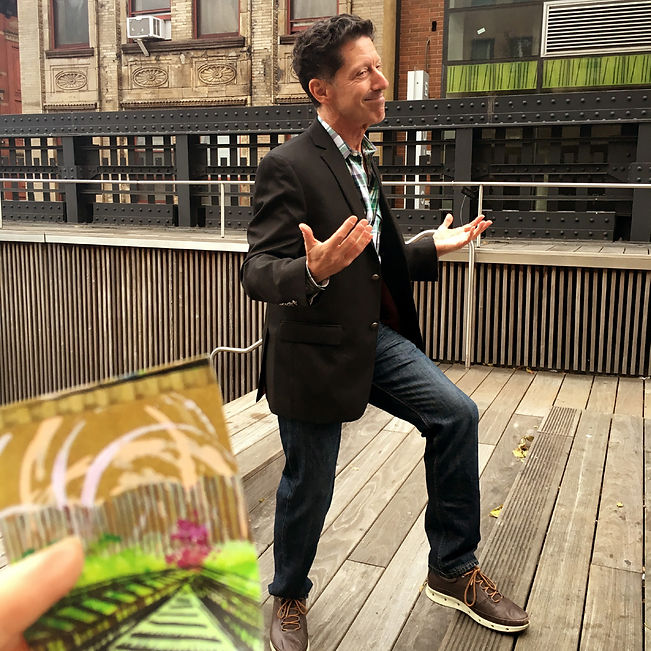
Few people explore Manhattan this way more thoughtfully than Mark Venaglia, the mind behind Manhattan Mark Tours, where private walks and artist-led museum experiences offer a more intimate and interpretive lens on the city. A native New Yorker, Venaglia approaches Manhattan not simply as a destination but as a living archive, one whose layers reveal themselves only to those willing to look beyond the obvious.
His walks are not about checking landmarks off a list. They are about understanding the layers of a city that never fully stops revealing itself. His thoughtful approach has also made him a preferred private guide for many of the city’s leading five-star hotels, whose guests seek a deeper and more personal encounter with Manhattan.
“Every Manhattan neighborhood of 2026 is misunderstood,” Venaglia explains. “Mostly because people are absorbing it through the lens of superficial social media commentary rather than firsthand experience.”
Correcting those misconceptions often becomes the starting point for the walks he leads. Instead of approaching the city through a checklist of attractions, he begins with something simpler: attention.
Architecture becomes the first teacher.
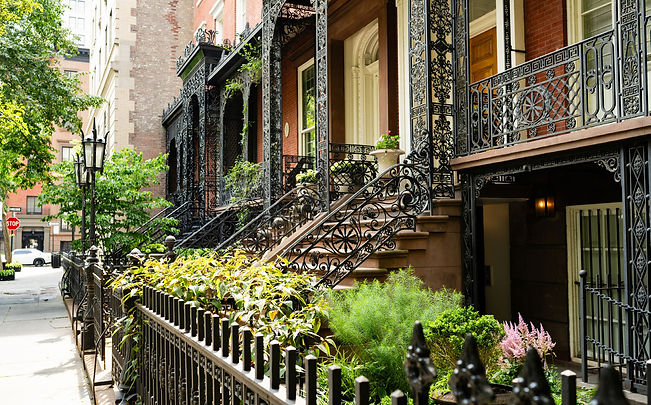
Manhattan, he notes, is less a skyline than a vertical archive of ambition. Buildings rise from different eras, ambitions, and philosophies, creating a dense visual dialogue that stretches from the colonial period to the present day. Walking Broadway from Bowling Green to Harlem offers what he describes as “perpetual rediscoveries,” a corridor where centuries of urban life unfold block by block.
.jpg)
A façade carved a century ago catches the late afternoon light. A church interior still holds the spiritual memory of a neighborhood, faintly scented with incense and history. Even the quietest streets reveal unexpected details once the pace slows enough to notice them.
One of the places where Manhattan’s layered history becomes especially visible lies along Midtown’s western edge, where the city gradually meets the Hudson River. Here, industrial history, maritime commerce, modern architecture, and evolving neighborhoods intersect in ways that rarely announce themselves to passersby.
Yet understanding Manhattan also means acknowledging its losses.
Many New Yorkers still mourn the destruction of the original Penn Station, but for Venaglia another vanished structure carries equal emotional weight.
“The loss I will never get beyond is the original Singer Building,” he says, referring to the once towering Beaux Arts skyscraper that stood just minutes from what is now Ground Zero.
But the story of the city is not only about nostalgia. It is equally about resilience.
Few places embody that resilience more powerfully than Lower Manhattan. The area surrounding Ground Zero and Battery Park City reflects both tragedy and renewal, demonstrating how the city absorbs change while continuing to evolve.
.jpg)
.jpg)
.jpg)
Venaglia often encourages guests to look beyond nostalgia and notice the bold achievements of the present. On many walks he pauses to point out Steinway Tower, the impossibly slender skyscraper that now rises above Midtown.
“The glory of Steinway Tower deserves recognition,” he says. “Even if that means admiring it through the Met’s southern-facing windows.”
Through Manhattan Mark Tours, Venaglia introduces guests to the city the way a lifelong New Yorker might reveal it to a close friend, pointing out overlooked architecture, forgotten stories, and perspectives rarely found in guidebooks.
The experience resonates across a wide spectrum of travelers, from first-time visitors encountering Manhattan’s energy for the first time to seasoned guests returning with a deeper curiosity about what they may have previously overlooked.
.jpg)
.jpg)
“Whether someone is arriving for the first time or returning for the hundredth,” he says, “there is always a moment when Manhattan reveals itself in a completely new way.”
That shift often happens quickly.
Within the first ten minutes of a walk, he says, something changes.
“It is like witnessing electrical current being turned on.”
Participants who arrive as observers begin to engage more deeply with the city around them. They ask different questions. They notice details they had previously passed without a second glance.
Afterward, the responses are often deeply personal.
“You have changed my life,” Venaglia says guests frequently tell him. “It sounds like a cliché, but it is still the most common response.”
Another comment appears almost as often.
“I feel like I have been spending time with my closest family member for the last few hours.”
For Venaglia, the relationship between guide and guest is not one directional. Each walk becomes an exchange of observation and perspective.
He listens carefully to the reactions of those walking beside him, adjusting the conversation and the route in real time. In doing so, he says, the city continues to teach him as well.
“You can be born here and still never be a New Yorker,” he reflects. “And someone can arrive twenty minutes ago and already understand the city deeply.”
That dynamic is part of what makes Manhattan endlessly compelling.
“We are still the great human experiment,” he says. “Not a melting pot, but something closer to an intergalactic experiment in creative collaboration and cultural synthesis.”
Seen through that lens, Manhattan becomes less a destination and more a living artwork.
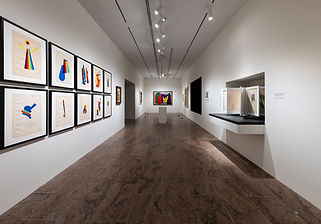
A constantly evolving canvas where architecture, culture, ambition, and everyday life collide—one Venaglia further animates through private, artist-led experiences at The Metropolitan Museum of Art, where the dialogue between past and present becomes immediate and deeply personal.
Venaglia hopes visitors begin to see it that way.
“Manhattan is a living, expanding painting,” he says. “An organic work of art that all of us contribute to moment by moment.”
And once you begin noticing the city that way, something shifts.
Manhattan stops performing for you and begins speaking.
Suddenly it is no longer simply a destination.
It becomes a story you are walking inside.
For first-time visitors, that story often begins as an introduction and quickly becomes something far more personal—a reorientation of how Manhattan is understood from the very beginning. For returning guests, it is a rediscovery. For newcomers, it is an awakening.
Those interested in exploring
Manhattan through Venaglia’s
distinctive perspective can learn more at
www.markvenaglia.com

Join our mailing list to receive curated updates, special features, and invitations to events that define the world of the discerning few.
Sign up today and never miss what’s next.